
Mountain pasture · Velika Planina
Velika Planina
A high pasture of shingled herdsmen’s huts at 1,600 m, reached by cable car, easy walking with big views.
- 4.0 km
- Highly rated


Language
Language
Archaeological site
Photo: U5K0 · CC BY-SA 3.0
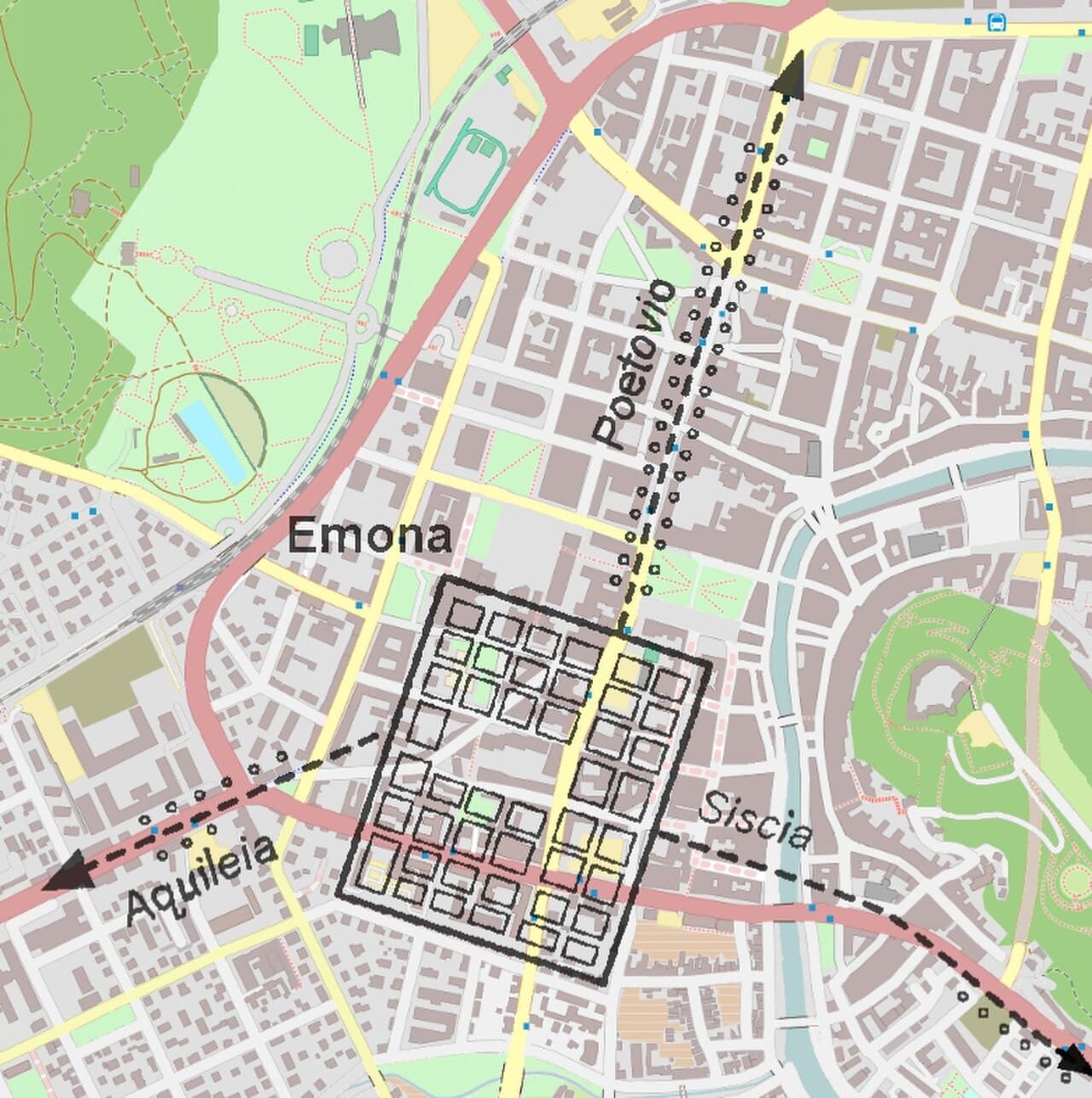
Emona was a Roman castrum, located in the area where the navigable Nauportus River came closest to Castle Hill, serving the trade between the city's settlers – colonists from the northern part of Roman Italy – and the rest of the empire.
Wikipedia · CC BY-SA 4.0
Emona’s remains include sections of the Roman city wall, residential houses, mosaics and part of an early Christian baptistery. At the Roman walls, look for the park and architectural elements from antiquity arranged by architect Jože Plečnik.
Emona was a Roman town laid out on a rectangular grid, with a central forum and strong stone walls. Construction followed in AD 14, and the town had about 5,000 to 6,000 residents, many of them merchants and craftsmen. Archaeological remains found in central Ljubljana include sections of the wall, houses, statues, tombstones, mosaics and part of an early Christian baptistery.
Plečnik reshaped a section of the Roman walls, opening passages and creating a park behind them with architectural elements from antiquity and a collection of stone monuments at the city gate. A turf-covered pyramid stands above the passage to Murnik Street. Emona was attacked by the Huns in 452, and by the first half of the 6th century there was no life left in the town. Plečnik House is 450 m away, and Ljubljana Castle is 600 m away.
Wikipedia (sl) · Wikipedia (en) · CC BY-SA 4.0
We have no accessibility data for this place. That does not mean it is inaccessible, please contact them directly.
Mountain pasture · Velika Planina
A high pasture of shingled herdsmen’s huts at 1,600 m, reached by cable car, easy walking with big views.
Museum · Ljubljana
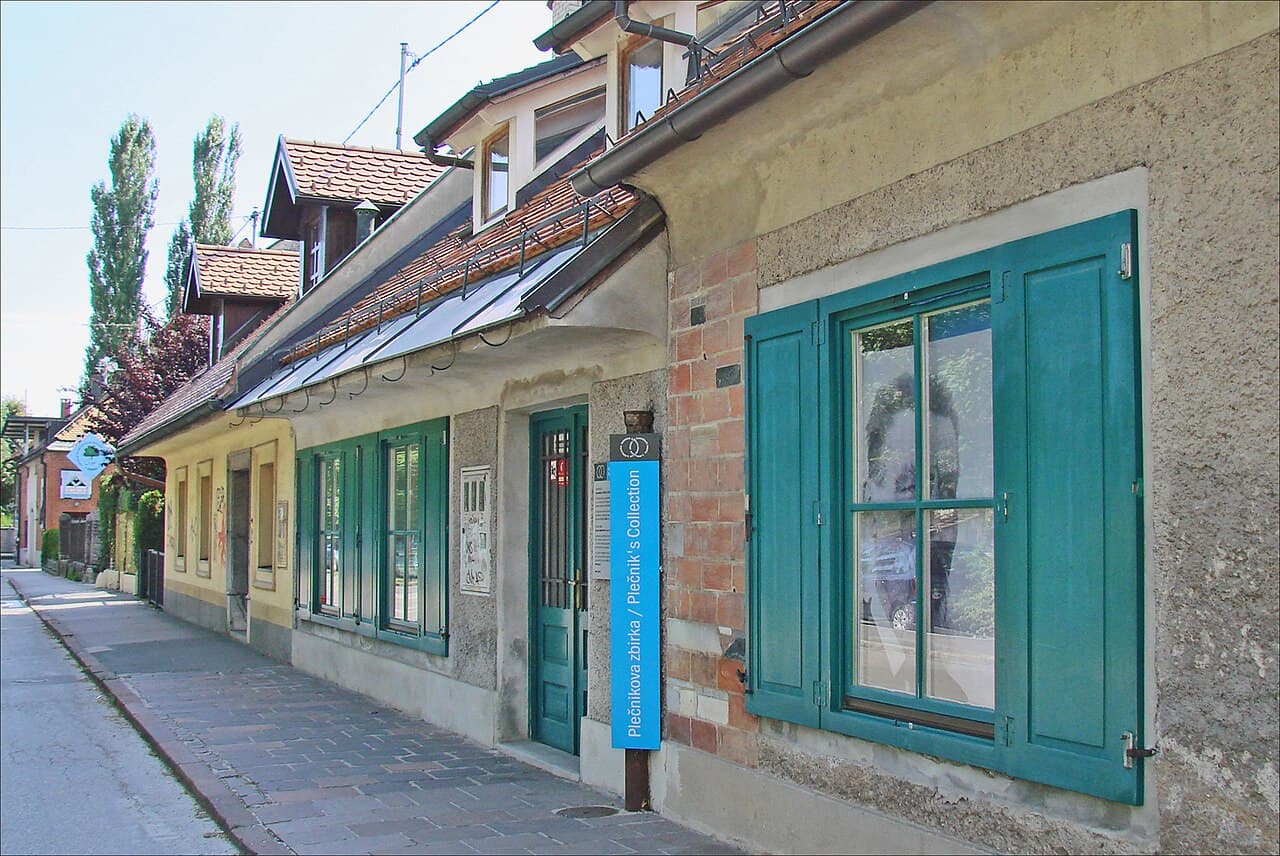
The house the architect built for himself in Trnovo and lived in until 1957, kept as he left it.
Castle · Ljubljana
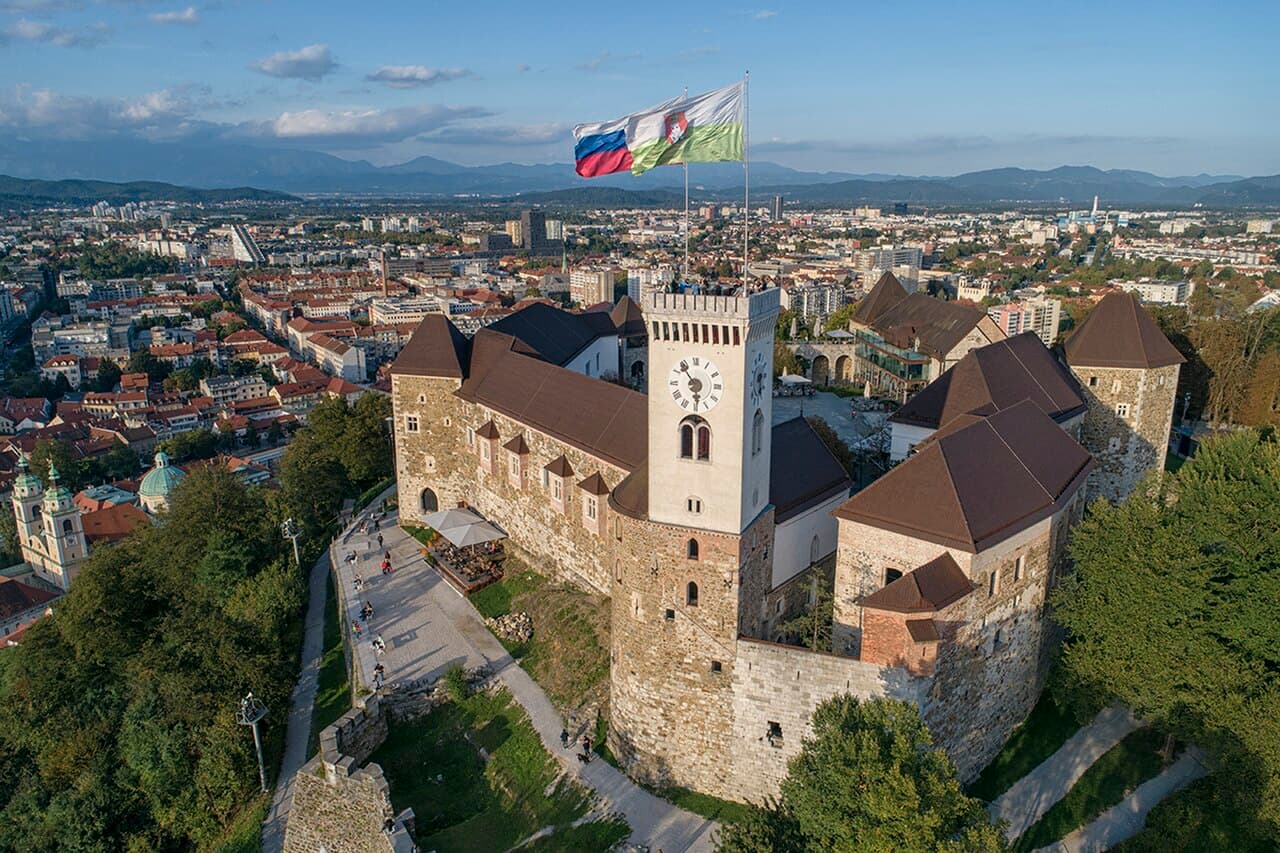
The fortress on the hill above the old town, reached by funicular in one minute or on foot in twenty.
Food market · Ljubljana
A Friday street-food market on the market square, where many of the country’s better kitchens set up stalls.
Restaurant · Ljubljana
A long-established Ljubljana restaurant in a courtyard off Čopova, strongest on fish and Italian-influenced cooking.
Market · Ljubljana
Plečnik’s riverside colonnade and the open-air stalls behind it, a working market, not a tourist one.

Archaeological site · Ljubljana
Krka Cave is a horizontal karst cave and an occasional source of the Krka River in Dry Carniola, central Slovenia. It lies in a pocket valley between the villages of Trebnja Gorica to the east and Gradiček to the west, north of the village of Krka.· Wikipedia
Archaeological site · Cerknica
Cross Cave, also named Cold Cave under Cross Mountain, is a cave in Slovenia's Lož Valley, in the area between the Lož Karst Field, Cerknica Karst Field, and Bloke Plateau. The cave is named after nearby Holy Cross Church in Podlož.· Wikipedia
Archaeological site · Vipava Valley
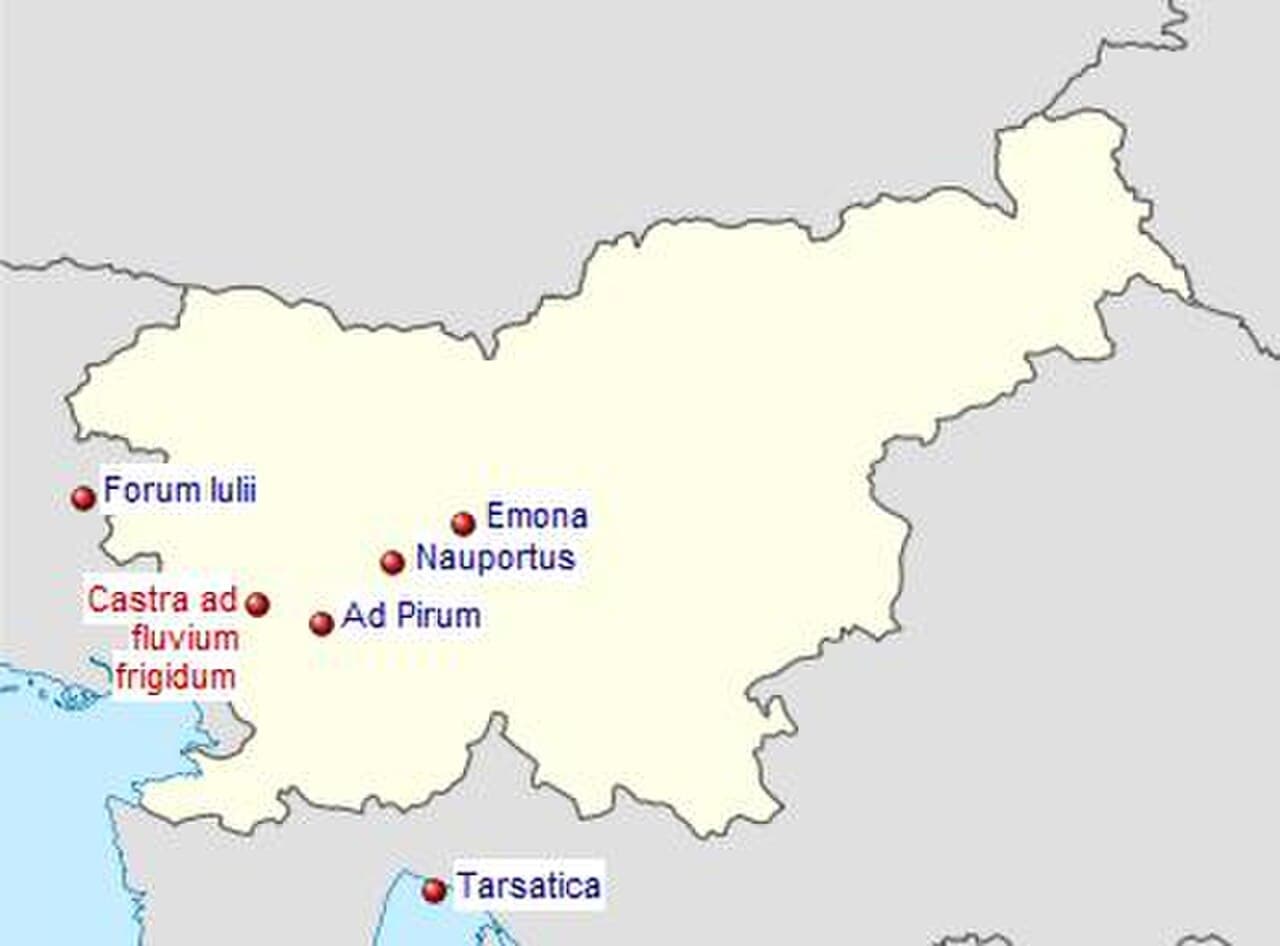
Claustra Alpium Iuliarum was a defense system within the Roman Empire between Italia and Pannonia that protected Italy from possible invasions from the East.· Wikipedia

Archaeological site · Vipava Valley
Ad Pirum was a Roman fortress. It was active during the time of the late Roman Empire.· Wikipedia