

Best Adventures in the Julian Alps: A Guide for 2026
The best adventures in the Julian Alps: the Soča, Bohinj, Bled, Vintgar and tandem paragliding. Rules, seasons, prices and tips for families, couples and nature lovers.
13 min read
Translated from Slovenian
The best adventures in the Julian Alps include kayaking or rafting down the emerald Soča, tandem paragliding over Lake Bohinj, walking through Vintgar Gorge, taking a pletna boat to Bled Island and hiking to the Ojstrica viewpoint above Bled. The hard part is choosing which one is right for you. Each has its own season, rules and level of difficulty, so you’ll get the most out of your trip if you choose an adventure based on who’s travelling with you, how much time you have and what the weather is like. Rok, the LetsVisit AI assistant, can help: tell him what you’re looking for and he’ll suggest experiences that fit your day.
In brief
The Soča is the setting for water adventures: boating in Triglav National Park is permitted from 1 April to 31 October, with the park’s approval and a paid permit.
Bohinj and Vogel offer tandem flights that require no previous experience. The views are especially beautiful in May and June.
Families with children love Vintgar, with its three-hour adventure and 13 stops, as well as the Soča Trail, which is easy and free.
Couples can round off the day with a pletna ride to Bled Island (an adult ticket costs €12 in 2026) and sunset views from a lookout point.
Safety is the visitor’s responsibility: stick to marked trails, check the weather and hire a licensed mountain guide for Triglav.
The Julian Alps at a glance
The Julian Alps are at the heart of Slovenia’s natural heritage, and most of their Slovenian side is covered by Triglav National Park, Slovenia’s only national park. It covers 840 km², or about 4% of the country. Its highest point is Triglav, at 2864 metres, and its lowest is the Tolmin Gorges, at 180 metres. This range in elevation helps explain the variety of adventures on offer: in a single day, you can stand on an alpine ridge in the morning and sit beside a river in a valley with a Mediterranean feel in the afternoon.
The park was first protected in 1924, and in 2003 the Julian Alps, including the park, became part of UNESCO’s World Network of Biosphere Reserves. For visitors, this means two things: unspoiled nature and rules to protect it. Most adventures take place inside or right next to the park, so it’s worth knowing the basic restrictions before you set out.
Most visitors start in one of three areas:
Bled, with its lake, island and viewpoints, is ideal for your first day and for guided tours.
Bohinj, a larger, quieter glacial lake, with a cable car to Vogel and trailheads for hikes.
The Soča Valley (Trenta, Bovec, Kobarid, Tolmin), where the real water adventures begin.
If you have a few days, take a look at our guide to Triglav National Park, with itineraries for 1 to 3 days, which links the areas into practical routes.
Water adventures: the Soča, Bohinj and Bled
Kayaking, canoeing and rafting on the Soča
The Soča is the river that brings many people to Slovenia in the first place. Its colour, ranging from turquoise to deep green, is at its best in spring and summer, when the snowmelt subsides and the water clears. The rules within Triglav National Park are clear: kayaking, canoeing and rafting are permitted downstream from Velika korita, with launch and take-out points at Velika korita, Bunkerji, Kršovec and Zmuklica. The season runs from 1 April to 31 October, and boating is permitted between 9 and 18, with the park’s approval and a paid permit.
For most visitors, a guided descent is the best option. A guided tour includes the equipment (a wetsuit, helmet and life jacket), knowledge of the river sections and the necessary permits, so all you have to do is enjoy yourself. Rafting is also suitable for beginners and older children, while kayaking is a good choice for those who want more independence. For more details about the river sections and rules, see our article on guided kayaking on the Soča.
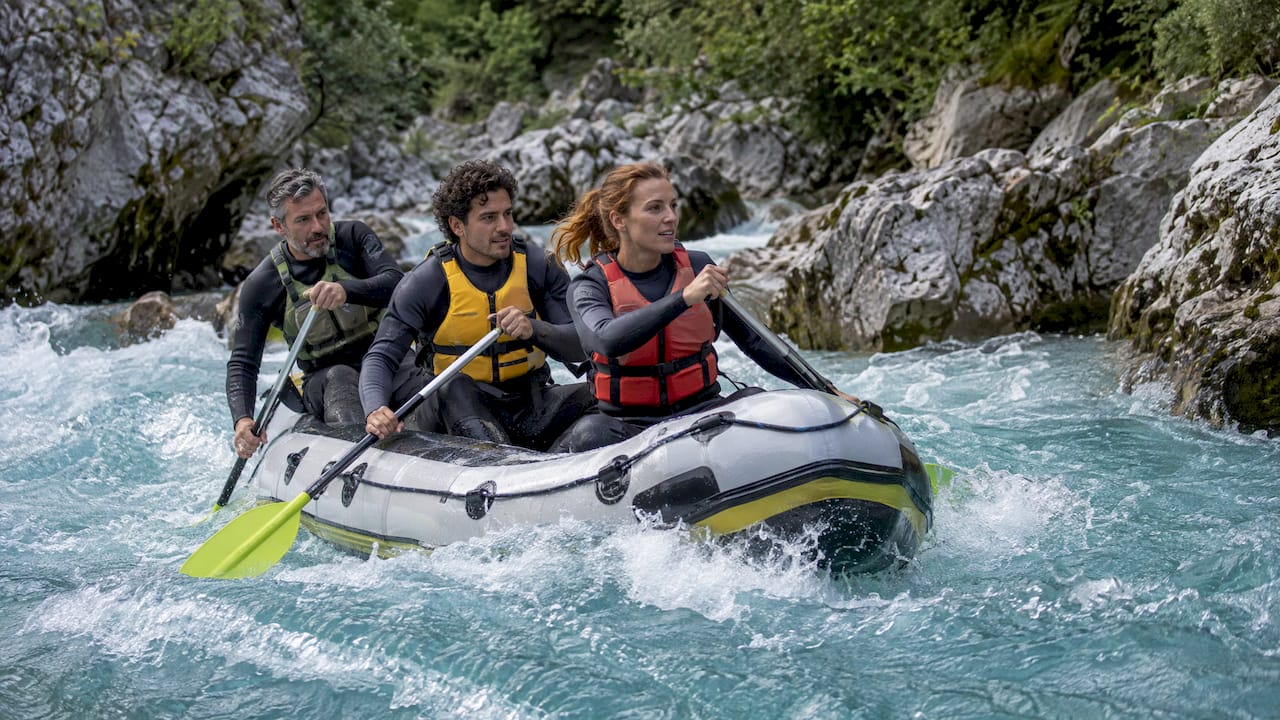
Tip: Head out in the morning, when there are fewer groups on the river, then enjoy lunch in Bovec or Kobarid, where local restaurants serve trout and regional dishes.
Lake Bohinj: peace and clean boats
Bohinj is for those looking for water without the crowds. Special rules apply on the lake: a permit is required year-round for all types of watercraft, except wooden rowboats and some smaller sports craft (boards, hydrospeed and floating craft up to 2 metres). The most beautiful mornings in Bohinj are when the mist slowly rises from the lake as you row towards Ukanc.
Pletna boats and Bled Island
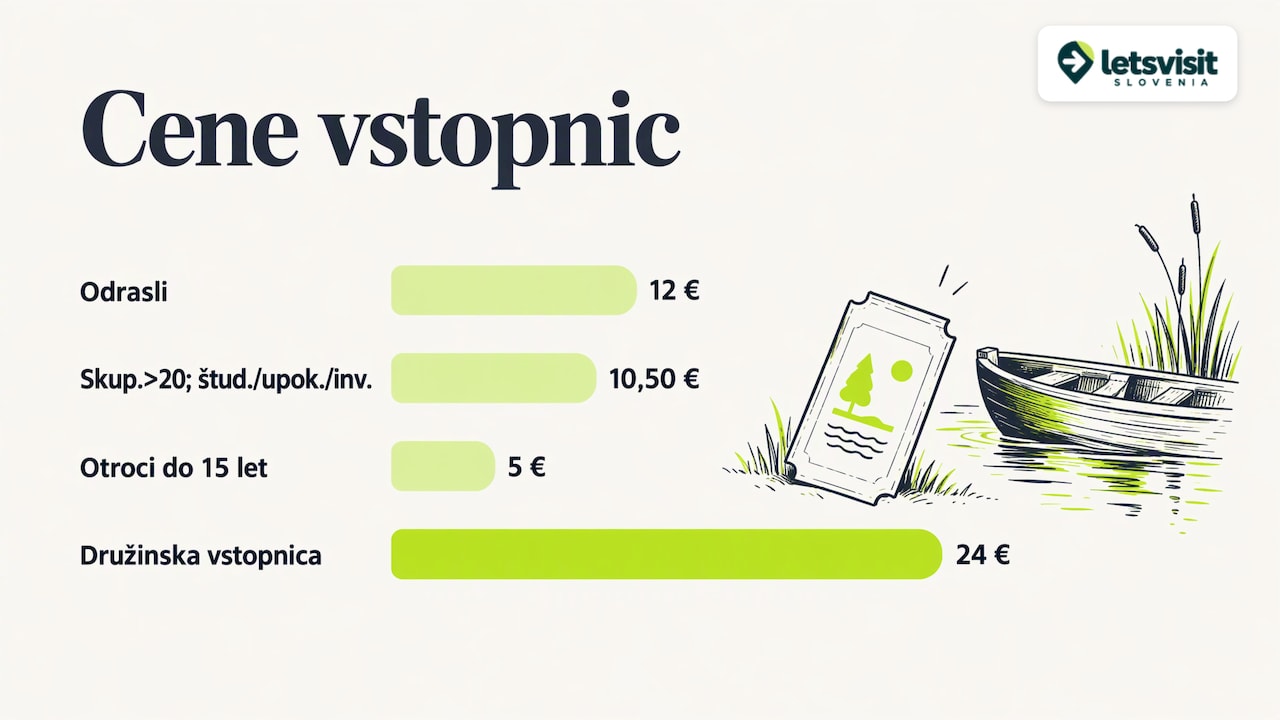
A ride in a pletna, a traditional wooden boat propelled by a standing rower, is Bled’s most iconic experience. A pletna, electric motorboat or smaller boat will take you to the island, and there is no time limit on your visit. In 2026, a ticket for the church, bell tower and museum costs €12 for adults, €10.50 for groups of more than 20 people, students, pensioners and people with disabilities, €5 for children up to 15, and €24 for a family. The electric boat leaves from central Bled every hour between 10 and 18.
To choose between the different tours of the lake and its surroundings, read our overview of guided tours in Bled.
Hikes and viewpoints for every fitness level
Ojstrica above Bled: a short climb with a big view
Ojstrica is one of the most popular viewpoints above Lake Bled. The trail starts on the southern side of the lake, not far from the campsite, and climbs steeply through the forest to a rocky outcrop. From there, you can see the lake, the island with its church and the castle on a steep cliff in the background. The climb is short but steep and root-strewn in places, so wear hiking boots, not sandals. It’s suitable for active families with school-age children, but the trail is more challenging than it looks on a map if you’re bringing younger children.
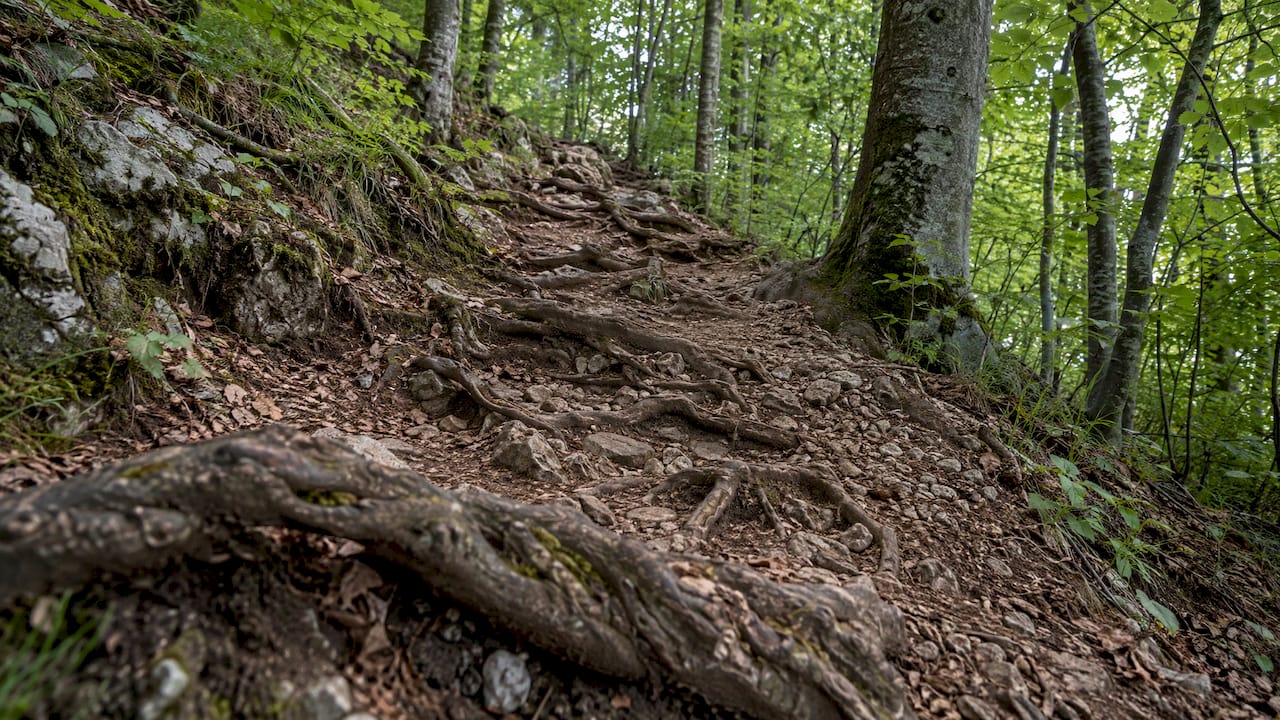
Go at sunrise or in the late afternoon: the light is softer and there are fewer people at the top. If you have more energy, you can continue along the trail to higher viewpoints on the same slope.
The Soča Trail: easy and free
The Soča Trail is an easy, 25-kilometre trail along the Soča from its source to Bovec, and part of the cross-border Alpe Adria Trail. You don’t have to hike the whole route: shorter stretches beside the river, with suspension bridges and views of the pools, are ideal for families. In summer, the park also organises guided walks, usually once a week in the morning and by prior arrangement, so check the official website for the current schedule.
The Seven Lakes: a day out for experienced hikers
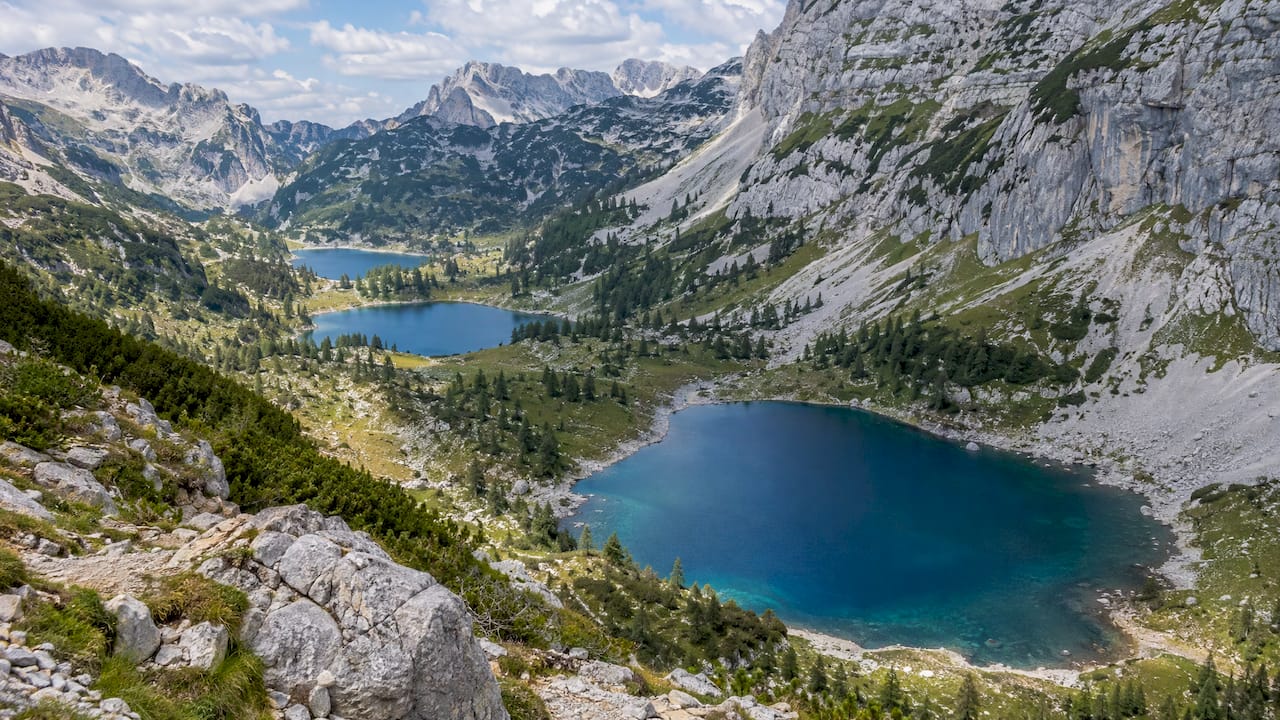
The Triglav Lakes Valley is one of Slovenia’s most beautiful high-mountain hikes. The route is long and requires good fitness, but the reward is a chain of glacial lakes nestled among limestone cliffs. Keep in mind that swimming in high-mountain lakes and streams is prohibited, as is the use of drones anywhere in the park. We describe the trails, walking times and mountain hut in our guide to the Seven Lakes hike.
Triglav: a summit that takes preparation
Climbing Triglav is a rite of passage for many Slovenians and the country’s ultimate mountain adventure for visitors. The park’s official 2026 summer guide warns that the climb requires excellent fitness and careful planning, and recommends setting off early, checking the weather forecast and hiring a licensed mountain guide. If you’re not experienced on protected climbing routes, hiring a guide is the only sensible choice. The routes, mountain huts and preparation are covered in our article on .
- #najboljše avanture julijske alpe


