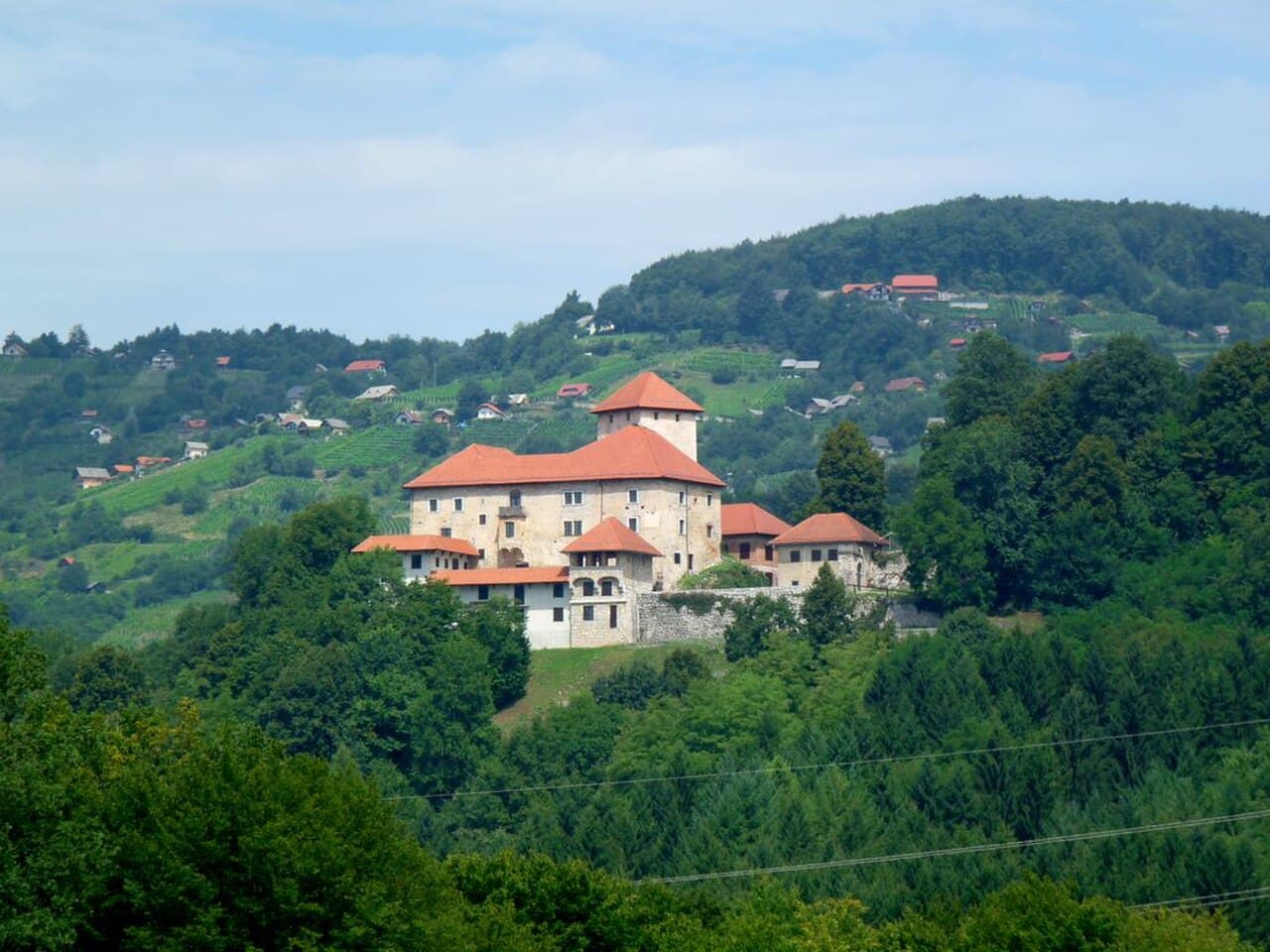
Visit Hmeljnik Castle to see a hilltop castle with a stair-tower and partly restored courtyard arcades. Its Gothic and Renaissance features reflect successive changes to the castle, which was also damaged during the Second World War.
About
First mentioned in written sources in 1217, Hmeljnik passed through the hands of several noble families before coming into bourgeois ownership in the 19th century. Its last owner, Filip Hugo baron Wamboldt, thoroughly renovated the castle and later passed it to his daughter Ana. Local people looted it, and partisans burned it in May 1942. Allied bombing caused further damage towards the end of the war.
The stair-tower rises above the central part of the castle, and the Renaissance arcades around the courtyard are partly restored. The castle was fortified with double walls and round watchtowers; a moat and drawbridge crossed the eastern approach. A chapel dedicated to St Pancras stood beside the castle. Restoration began in the late 1950s but soon stopped, and the building has continued to deteriorate. Grad Štatenberk is 2.0 km away.
The Kandija Bridge, or the Old Bridge is an iron bridge in Novo Mesto, Slovenia. It connects the old city core on the left side of the Krka River with Kandija, a historical suburb of Novo Mesto, on its right side.· Wikipedia
The Barbo Manor is an 18th-century manor-house located in the settlement of Vesela Gora, part of the Municipality of Šentrupert in Inner Carniola, Slovenia.· Wikipedia
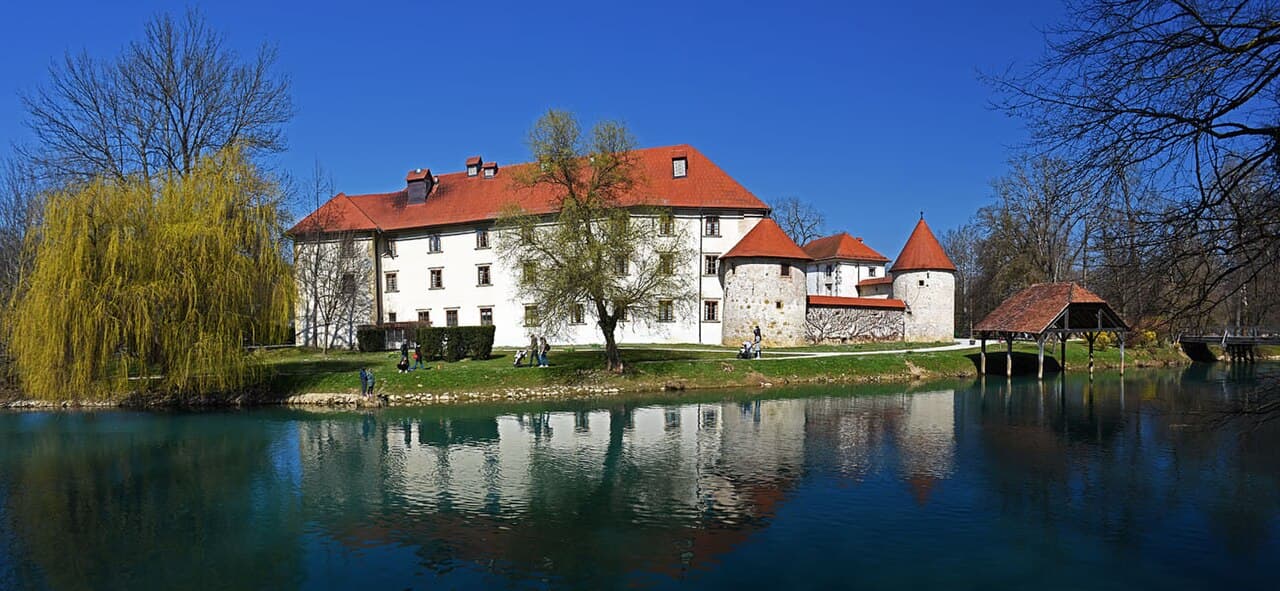
Otočec Castle is a castle hotel on a small island in the middle of the Krka River in Otočec, Slovenia. It is the only water castle in Slovenia.· Wikipedia