Castle · Ptuj
Ptuj Castle
The castle above Slovenia’s oldest town, holding a strong regional collection and the Kurentovanje masks.


Language
Language
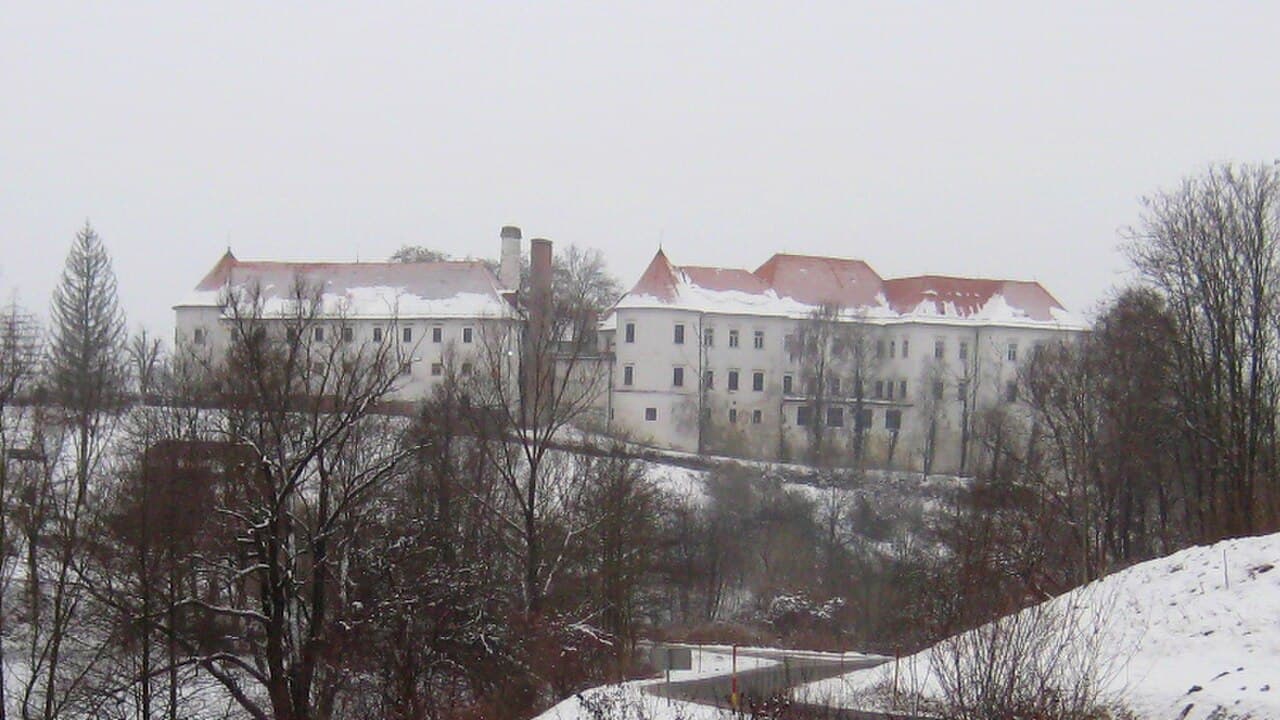
Castle
Photo: Sl-Ziga · Public domain
A castle near Maribor.
See one of Slovenia’s largest preserved castles and its mix of Renaissance and Baroque architecture, including three towers and a courtyard enclosed by later wings. Its history also includes a 1945 detention camp, a sombre part of the site’s story.
Hrastovec Castle is a large complex whose older southern section dates to around 1600. It has three two-storey Renaissance-style wings and three towers. The northern wings, built between 1655 and 1666 to plans by architect Domenico Della Torre, enclose an inner courtyard. Above the entrance to the northern section is the date 1668; inside are a grand staircase, a Baroque hall and a chapel, with Baroque stucco decoration. The castle has operated as a social care institution since 2010.
The castle was first mentioned in writing in 1443 and was held by the Herberstein family from 1481, apart from a period when it was sold, until the Second World War. In 1945, OZNA used it as a detention camp; many prisoners died or were killed. The nearby Črni Križ, associated with the local legend of Agata, is 2.1 km away.
Wikidata · Wikipedia (sl) · CC BY-SA 4.0
We have no accessibility data for this place. That does not mean it is inaccessible, please contact them directly.
Castle · Ptuj
The castle above Slovenia’s oldest town, holding a strong regional collection and the Kurentovanje masks.
Cable car · Maribor
A gondola from the Maribor suburbs to the Pohorje ridge, skiing, bike trails and forest walking from a city bus stop.

Palace · Maribor
Jakobski Dol Castle is a 17th-century castle located in the settlement of Spodnji Jakobski Dol, part of the municipality of Pesnica in northeastern Slovenia.· Wikipedia
Winery · Ptuj
The oldest wine cellar in Slovenia, storing wine under Ptuj since 1239, with an archive going back to 1917.


Castle · Maribor
Cmurek Castle is a castle in Trate, Slovenia. It stands on a steep cliff above the bridge over the Mura River at Trate, the international border crossing to the Austrian village of Mureck.· Wikipedia