When to Visit Slovenia: The Best Time for Your Trip
When should you visit Slovenia? A look at the seasons for nature, family trips, romantic weekends and food, with practical tips on crowds and reservations.
12 min read
Translated from Slovenian
The best time to visit Slovenia is the time that suits what you want to experience. For hikes, lakes and rivers, the loveliest months are from late spring to early autumn; April and November are great for food and wine, while December to March is the season for snow. Since the Alps, the Karst, the coast and the Pannonian hills all meet in a small area, the weather can be very different from one part of Slovenia to another, even in the same week. So it is not enough to know which month is “best”: you need to match your trip to the place, the weather and the time you have. That is exactly what Rok, the LetsVisit AI assistant, does: tell him when you are arriving and what you enjoy, and he suggests trips, activities and places that are a good fit for that time.
In brief
Nature and hikes: June to September. June is sunny but not too hot, while September is a great time to climb Triglav.
Food and wine: April and November, when wine roads and traditional inns take centre stage and there are fewer crowds.
Winter: December to March for skiing, snowshoeing and thermal spas; February or March also brings Kurentovanje in Ptuj.
Families: Summer for swimming in lakes. Caves are pleasant year-round because the temperature stays around 12 °C.
Planning: Book accommodation and activities well in advance for Bled, Bohinj and the coast in July and August.
Slovenia’s seasons at a glance
The national meteorological service divides the year into meteorological seasons: spring runs from March to May, summer from June to August, autumn from September to November and winter from December to February. This division is also the most practical one for planning a trip.
Season | Months | Best for | What to keep in mind |
|---|---|---|---|
Spring | March–May | towns, waterfalls, cycling, first wine trips | there is still snow in the mountains, and May is often rainy |
Summer | June–August | swimming, rivers, high mountains, the coast | July and August are the busiest months |
Autumn | September–November | Triglav, mushrooms, grape harvest, thermal spas | days are shorter, and mountain huts close |
Winter | December–February | skiing, snowshoeing, thermal spas, Advent | mountain roads and trails may be closed |
Three climates in one small country
When deciding when to visit Slovenia, it is worth remembering that you are not travelling into just one kind of weather. The country has three overlapping climates: a temperate continental climate in central and eastern Slovenia, an alpine climate in the mountains and a sub-Mediterranean climate west of the Alpine-Dinaric barrier. The most rainfall, around 3,200 mm a year, falls in the Julian Alps, and temperatures drop by about 0.6 °C for every 100 metres of altitude.
What this means for you in practice:
By the sea (Piran, Izola, Portorož), spring arrives earlier and autumn lasts longer than inland, making the coast a lovely destination in April or October too.
In the Julian Alps (Bled, Bohinj, the Soča Valley), the weather is more changeable, and afternoon showers are common in summer.
In the east (Prlekija, Haloze, Pomurje), summers are warm and dry, while the wine-growing hills glow with shades of yellow and copper in autumn.
According to the same overview, the lowlands are warmest in July and the mountains in August; January is the coldest month in the lowlands, while in the mountains it is February. So if you are planning a high-mountain hike, late summer is generally a safer choice than early June, when snow often still lingers on shaded slopes.
Spring: waterfalls, flowering meadows and crowd-free towns
Spring is when Slovenia wakes up. Rivers and waterfalls are full from the melting snow, meadows in alpine valleys burst into bloom, and in towns, life moves out onto terraces by the water. Ljubljana, Maribor and Piran are lovely for strolls in April and May, before the summer heat and queues at attractions arrive.
What works best in spring:
Waterfalls and gorges (Savica, Kozjak, Vintgar), when water levels are at their highest. Allow 2 to 3 hours per location.
Cycling through valleys and around lakes, while temperatures are still mild.
City breaks with visits to markets and a taste of local food; our Ljubljana food guide will help you explore the capital.
First wine trips: Lonely Planet highlights April as one of the best months for food and wine.
What to keep in mind: May is often one of the rainier months, and high-mountain trails are still covered in snow. For a spring trip, choose lower-altitude destinations and have a backup plan for a rainy day, such as a cave, museum or tasting. If you would like to know what an evening like this involves, step by step, read about what to expect at a wine tasting so you know what awaits you at the winery.
Summer: lakes, rivers and high mountains
Summer is when Slovenia is at its liveliest. The lakes are warm enough for swimming, the Soča beckons with rafting and canoeing, and high-mountain trails are clear of snow and mountain huts are open. According to Lonely Planet, June is usually sunny but not too hot, making it ideal for hiking and cycling before the bigger crowds arrive in July and August.
Best summer experiences:
Swimming in lakes: Bled, Bohinj and smaller lakes around the country. Find out where and how to swim safely in our guide to swimming in Slovenia’s lakes.
High-mountain hikes: one of the most beautiful is the Seven Lakes Valley hike, which you can split over two days with an overnight stay in a mountain hut.
Water adventures: rafting, canyoning and kayaking on the Soča or Sava Bohinjka.
Bled and the surrounding area: a traditional pletna boat, the castle and viewpoints. Find a collection of ideas in our article on the best activities in Bled.
Practical summer tips: visit popular spots at sunrise or in the late afternoon, when the light is better and car parks are less crowded. Start your mountain hike early, as afternoon thunderstorms often develop in summer. July and August are also the months when you should book accommodation on the coast and around Bled and Bohinj well in advance. The same goes for guided activities with limited places.
Autumn: golden forests, mushrooms and the grape harvest
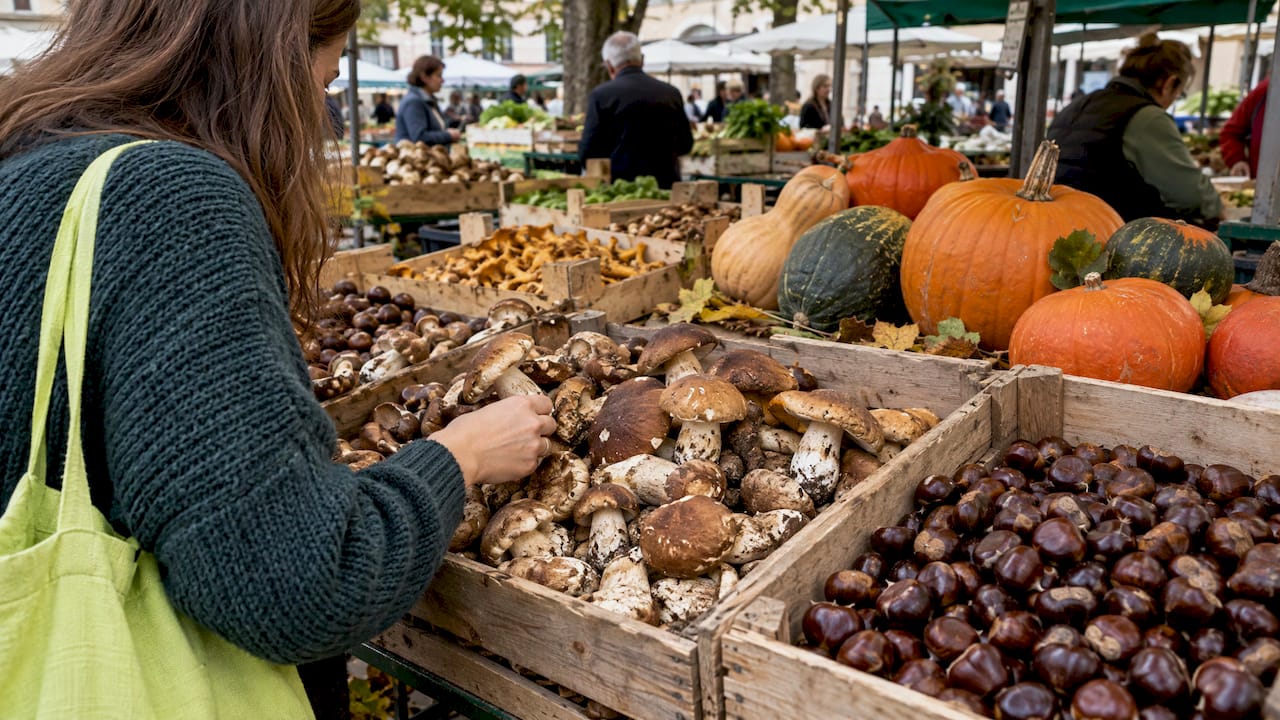
For many travellers, autumn is the loveliest time to visit Slovenia. The summer crowds are gone, the forests change colour, mornings are misty and afternoons are often still sunny. Lonely Planet recommends September as a great month to climb Triglav and pick mushrooms, while November, along with April, is one of the best months for food and wine.
What to expect in autumn:
September in the mountains: more stable weather and fewer people on the trails, but shorter days, so start your hike early.
October in the valleys: Bohinj, Logar Valley and the Soča in autumn colours are ideal for photographers and leisurely walks.
Grape harvest and St Martin’s Day: in Goriška Brda, the Vipava Valley, Prlekija and Dolenjska, traditional inns and tourist farms serve autumn dishes and young wine.
- #kdaj obiskati slovenijo